



Overview
Responding to the climate crisis
As a global business, De Beers recognises the urgency for tangible collaborative action to tackle the climate crisis.
By aiming to reduce the climate impact of our operations and developing partnerships to accelerate the energy transition, De Beers is working towards a lower carbon future that benefits the communities that make our business possible.
In 2023, De Beers proudly became the first diamond mining company to have emissions reduction targets validated by the Science Based Targets Initiative.
Our 2030 goal
We aim to reduce our carbon footprint by a third by 2030.
This means reducing our Scope 1 (direct) & 2 (indirect) emissions by 42% and our Scope 3 emissions (from our value chain) by 25%, in line with our validated science-based targets.

Our approach
Tackling our direct emissions
Scope 1 emissions relate to our direct emissions, such as those produced by our mining equipment.
We’re reducing emissions by improving the efficiency of our mining equipment and replacing diesel-powered machinery with electric alternatives where possible, allowing us to benefit from renewable energy. We’re also exploring cleaner fuels and supporting job creation by working with local farmers to grow oilseed crops for biofuels, alongside circular waste-to-energy approaches such using pyrolysis to create circular fuel from waste tyres – to further cut our carbon footprint.

Our approach
Reducing our indirect emissions
Scope 2 emissions relate to the electricity we use.
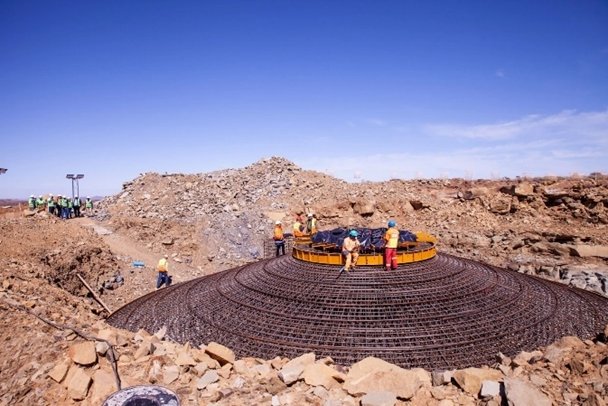
As most electricity in Southern Africa is still generated from coal, we are investing in partnerships that expand access to clean and reliable electricity sources such as solar and wind. We are committed to advancing this transition in a way that prioritises fairness, equity and shared value. Through long-term collaboration with public and private partners such as Envusa Energy, our joint venture with EDF Renewables in South Africa, alongside Nampower in Namibia and the Botswana Power Corporation in Botswana, we are helping to secure energy for our operating regions, not just our mines.

Our approach
Working with our suppliers
Scope 3 emissions relate to emissions generated from within our value chain.
Although these emissions are outside our direct control, we work closely with customers and suppliers on their carbon-reduction strategies through our strategic supplier programmes.
We also continue to support high-quality nature-based climate solutions. For example, our US $2 million investment in Kelp Blue, an award-winning start-up pioneering carbon sequestration (capture and storage) through kelp cultivation off the coast of Namibia, which also supports local livelihoods.

Related UN Sustainable Development Goals
Affordable & Clean Energy
Ensure access to affordable, reliable, sustainable and modern energy.
Climate Action
Take urgent action to combat climate change and its impacts.

LIVELIHOODS
Supporting a brighter future through diamonds.
Learn more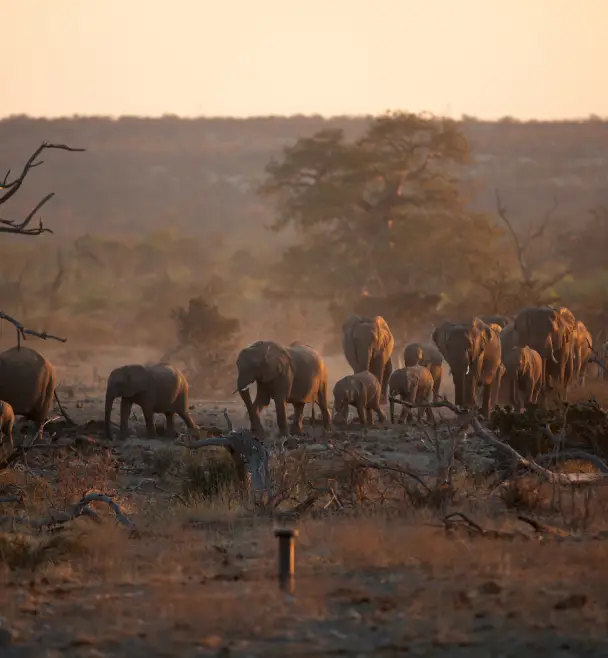
NATURE
Restoring and protecting biodiversity.
Learn more
PROVENANCE
Enhancing transparency through diamond provenance
Learn more